Q&A with Janice Page, author of ‘Year of the Water Horse’

Editor’s note: This Q&A appeared in Cog’s weekly Sunday newsletter. To become a subscriber, sign up here.
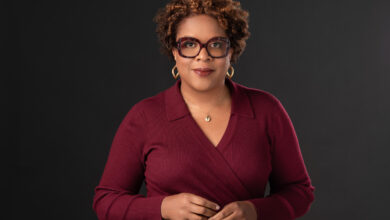
Janice Page is the arts editor at The Washington Post. Prior to that, she worked at The Boston Globe, and has also been on staff at the Los Angeles Times, The Providence Journal-Bulletin and written for The New York Times and MSN.
Originally from Braintree, Mass., Page was the youngest child in a large Catholic family. (Her eldest sibling was 19 when Janice, the sixth child, was born.) Page met her husband, James, just after graduating from Rutgers University and soon after she absorbed two devastating losses: her sister, Patty, and brother-in-law, Jan (another sister’s husband), both to cancer. At the time, she was waitressing part-time at Mandarin Garden, the only Chinese restaurant in Braintree. James, also the youngest in his large family, had just arrived in America from Taiwan.
The two work to bridge the divide between them emotionally, culturally and geographically as they build their lives together. From Taiwan to Los Angeles, from her mother’s bipolar disorder to a language barrier with her mother-in-law, who fled mainland China during the civil war in 1945 — and left a daughter behind — Page finds herself constantly searching for the feeling of home. When she and James adopt a baby girl, Zoe, from James’s ancestral region of China, they close a circle that had been open for generations in both of their families.
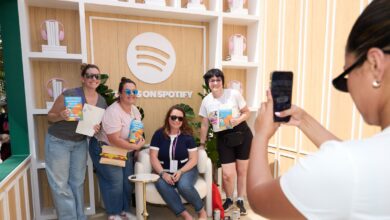
The Q&A below is adapted from a conversation we had at Brookline Booksmith on January 14, 2026. You can read an excerpt of the book (“It was the greatest day of my life. But even at 5, I saw trouble”) adapted from Chapter 1, here. – Cloe Axelson
Cloe Axelson: “The Good Earth,” the 1931 novel by Pearl S. Buck comes up in your book again and again. Can you tell us what you found so enchanting about that novel as a kid? And why it stuck with you?
Janice Page: At first it was the cover, because covers are an amazing gateway, right? What does this book hold? There wasn’t a lot competing for our attention back then. We had television and movies and we had books — and weekly trips to the library were a big deal. So, first the book just jumped out at me because of the cover — it was this kind of muted earthen tones and this sun that was receding on the horizon.
It looked exotic, as it was meant to, for American kids I’m sure. I don’t want to overplay the narrow existence of growing up in Braintree — it’s a lovely town, a wonderful town, I love it — but I was really quite old when I first met my first Jewish kid. Until that point, there were really only Protestant and Catholic white people in my universe. And we had exactly one Black boy in our class who had been bussed in from Dorchester [as part of the METCO program]. When you grow up in that environment, you are always looking to expand your horizons through other means – through literature, through culture. And when I cracked open that book and began reading, it cultivated all these images that I used to travel in my brain.
I wanted to experience what it would be like to be in this person’s shoes — and for all the wrong reasons of really thinking of that as exotic, but all the right reasons of wanting to be more expanded in my mindset.
I was a kid from a narrow existence searching for, and even accidentally finding, ways to open her mind. This seems to be — maybe I’m wrong — the opposite of what a lot of people are trying to do right now. It’s striking to me how many years and decades could have passed between the time I was raised and now.
There’s so much to offer in the world, so much to be absorbed. I’m proud that this book is coming out now. I’m proud that it’s landing at a time when people should stop being so damn myopic and open their minds and heart.
CA: You are a very practical person. But you also seem open to the idea of the universe having some hand in our lives. You yelped with joy upon learning that your mother-in-law’s first child and your daughter were born under the same Chinese zodiac sign — the water horse — 60 years apart. Tell me about the difference between fate and serendipity, and how you’ve untangled those two concepts.
JP: I do not believe, as I say in the book, in a fate that is scripted — as though it’s handed down and all we’re doing here is living a script.
I just can’t believe in a higher power that would do some of the things that I see happening in the world. I don’t ascribe that to this higher power — and I definitely don’t think that we lack free will and or responsibility to do the things that we should do.
What I do believe in is both serendipity and a multitude of paths. That comes flying at you every single day. Nobody could’ve said that I would choose a path of answering a classified ad in 1979, that led me to a newly opening Chinese restaurant, where a guy there would turn up my life upside down, but also open it up to the person who I would end up marrying, and therefore the child that I now can’t imagine my life without.
These choices that we’re making one after another — answering that classified ad, staying at Mandarin Garden for the summer, going back to that restaurant ending up, you know — meeting my husband, ending up adopting.
That’s what I believe is beautiful serendipity.

CA: Your daughter, Zoe, will be 23 later this month. Has she read the book? What was her reaction to it?
JP: Those of you who know Zoe know she is frank above all else; she says what she thinks. Before I ever got serious about writing this book, when Zoe was in junior high school, I went to her and said, ‘I’m thinking about doing this, but I won’t do it if you don’t want me to.’
She was young, and she said, ‘Am I gonna be in it?’ When I said yes, she told me: ‘Oh, that would be so cool.’ I also told her that I wasn’t going to appropriate anyone’s story, and certainly not hers. I explained that I’d have to write about her adoption — and it would be similar to the magazine piece she’d already seen — but that I would leave her story to her. I don’t even think she knew what that meant at the time, but she was like, ‘Yes, fine.’
Fast forward 10 years and it was time to show her the book, and that was way harder. When I showed the book to my family and to her, it was just hard. It’s my point of view and that doesn’t always mesh with everyone else’s.
I gave it to Zoe. She comes back and says, ‘Oh, it’s great.’ And she may or may not have said, ‘It’s gonna be a bestseller’ — just what her mother wants to hear.
And then she said, ‘I’ll be honest, I wasn’t really looking forward to reading it. I thought I’d read it over a couple weeks and, you know, and I’d do it because I knew I had to.’
But she read it in one day and she said: ‘I’m really glad it gives me a window into the people and stories that I didn’t know.’ This is a direct quote from her. She said, ‘It shows me whose shoulders I stand on.’ And I was like, I’m done. That’s perfect. I don’t need any other reviews. I don’t need anything else.
Source link