
Where Pain Becomes Purpose: A Story for the Dreamers and Fighters
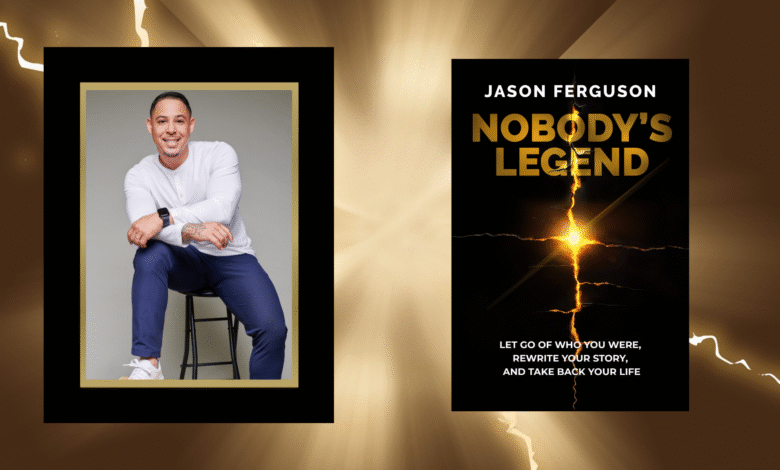
Every scar tells a story—but for this author, the scars became the spark for a message of resilience. Raised in hardship, nearly lost to addiction, and tested by fear on and off the football field, he has built a life rooted in grit, clarity, and transformation.
In this Q&A, author Jason Ferguson opens up about rock bottom moments, the lessons fear has taught him, and why he believes every passing second is a chance to turn it all around.
You dedicated the book to underdogs, dreamers, and fighters. Why do you feel so connected to that audience?
Because I am them. I was raised by a single mom I watched survive abuse at the hands of my biological father. That violence did not just leave emotional scars; it forced us to start over with nothing. We were broke as hell, but we had love, and that mattered. I had no handouts. I literally started at ground zero. I was a five foot five, one hundred thirty five pound football player with more dreams than resources. Later, I fell into a decade long opioid addiction that nearly took my life. I know what it is like to feel hopeless, to wonder if things will ever change. But they can. That is why I wrote this. For the ones clawing their way out. The ones nobody bets on. If my voice can spark belief in just one person ready to quit, then all of it, the pain, the fight, the scars, was worth it. Every passing second is a chance to turn it all around.
Early on, you recount a terrifying moment of withdrawal where you even considered robbing a pharmacy. Looking back, what role did that “rock bottom” play in reshaping your path?
That was the first moment I realized my thoughts, emotions, and actions could not only get me killed but could put someone else’s life in danger. I had already done some desperate, shameful things to feed my addiction, but this was different. This was the first time I was ready to commit a felony that could hurt innocent people. I had lost all control. I was completely consumed. It showed me exactly what the fork in the road looks like. You see homeless people every day and hardly notice them anymore, like they are wallpaper plastered along the edges of the city. But those are real people, with real stories. Many of them are addicts, just like I was. That moment made it real. It showed me how someone ends up there. On the street. In a cell. Or in the ground.
Fear plays a huge role in your story—especially in your first varsity game, where you had a panic attack the night before. What did that “get hit” moment teach you about fear that still guides you today?
It taught me that life is a contact sport. You cannot think your way through fear. You have to move. That moment showed me that fear thrives in inaction, but action cuts through the noise. Activity creates insight. Fear had convinced me that the hit would break me, but once it came, I realized it was never the hit I was afraid of. It was the story I had built around it. I learned that most fear is not rooted in reality. It is your brain trying to protect you from discomfort, using worst case scenarios as a shield. But comfort never built anything meaningful. What changed everything was the power of small, intentional wins, or what I call micro wins. Just suiting up, stepping on the field, taking the hit. When you move toward the fear, instead of away from it, you realize you were capable all along.
You write that “thoughts become things” and describe using visualization from a young age. How do you balance visualization with the “massive action” you emphasize throughout the book?
Visualization is the spark, but action is the magnet. When you visualize with clarity and intention, you activate the reticular activating system in your brain, your internal filter for focus and opportunity. It tunes your awareness to the people, places, and possibilities that align with what you want. But the RAS only points. It does not move your feet. That is where action comes in. Visualization gives your brain a target. Action moves you toward it. That is the balance. I use visualization to stay emotionally connected to the goal, to keep the fire lit. But it is massive action that builds the momentum and creates windows of opportunity, moments you would have never encountered by standing still. And sometimes, those windows can change your life forever.
Much of your story is about resilience and transformation. What do you hope readers facing their own setbacks will take away as the first step toward rewriting their story?
Transformation starts with clarity. You cannot rewrite your story until you get honest about the one you are living now. That means facing the thoughts, behaviors, and emotional patterns keeping you stuck. For years, it was my own thinking that kept me trapped in hell. Not my circumstances. Not anyone else. Me. You have to strip it all down. No filters. No sugarcoating. No more lies. Own exactly where you are. Then get clear on where you are going. Not with vague goals, but vivid detail. What does the future version of you look like? How do they move? How do they think? Who do you really want to be? How do you want to feel when you wake up, when you walk into a room, when you are alone with that voice rattling around in your head? Clarity is the starting blocks of transformation. Once you are clear, you can get to work.
After sharing such a vulnerable and wide-ranging story, what’s the next chapter for you—personally or as a writer?
Today, I dream bigger than ever. I am still a sales leader in tech and want to keep changing the lives of my customers and my team. I will keep pouring into them with everything I have and take the business to new heights. But my deeper purpose lives in coaching and speaking. Connecting with people, sharing real stories, and helping others unlock what they did not think was possible. I want to expand that reach. More stages. More coaching. More impact. Not just for sales professionals, but for anyone ready to break through. As a writer, I know I have three or four more books in me, and I am fired up about what is next. But first, I will be coauthoring a children’s book with my daughter, Zsa Zsa. She is brilliant, wildly creative, and full of ideas. I will need to be on my A game just to keep up.
Jason Ferguson is the author of Nobody’s Legend, a raw, electrifying memoir about identity, addiction, and personal transformation. A former Division I football player turned elite success coach and sales leader, Jason brings lived experience and hard-won insight to every page. Raised in Los Angeles and forged through loss, violence, and long odds, he rebuilt his life after a decade-long battle with opioid addiction—emerging with a voice as powerful as it is unfiltered. Professionally, he helped scale tech giant ServiceTitan from startup to IPO and now consults early-stage founders on building revenue teams grounded in grit and growth. His work speaks to anyone who’s ever felt lost, stuck, or underestimated—and shows what’s possible with the right mindset and momentum. Whether coaching behind the scenes or bringing that fire to the stage, Jason shows up with a rare mix of vulnerability and strength, helping others turn struggle into fuel for something greater.


