Indies Introduce Q&A with Char Adams
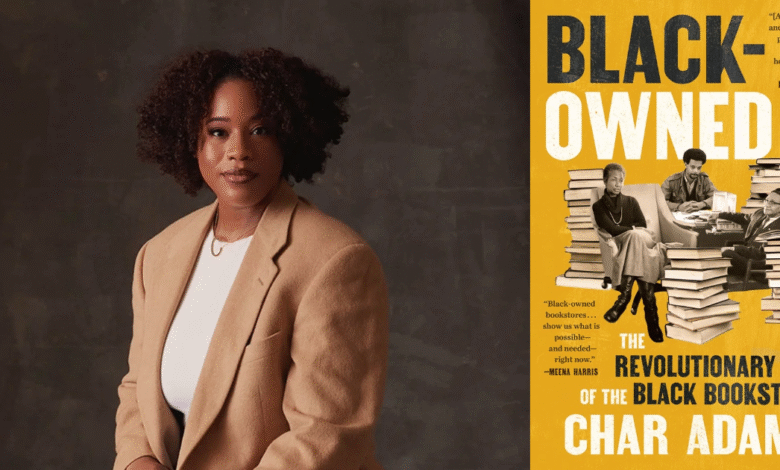
Char Adams is the author of Black-Owned: The Revolutionary Life of the Black Bookstore, a Summer/Fall 2025 Indies Introduce adult selection.
VaLinda Miller of Turning Page Bookshop in Goose Creek, South Carolina, served on the panel that selected Adams’ book for Indies Introduce.
“As an avid book lover, there’s nothing more fulfilling than witnessing the celebration of Black bookstores,” said Miller. “Black bookstores are more than just places to purchase books; they are community hubs that foster connection, understanding, and empowerment. Black-Owned: The Revolutionary Life of the Black Bookstore not only delves into the intricacies of running a Black bookstore, but also explores the vibrant narratives and rich experiences within these spaces. It offers a deep dive into the triumphs and trials that bookstore owners face, providing readers with a nuanced understanding of the dedication and passion involved. It highlights the cultural importance of Black bookstores, showcasing their role in preserving and promoting Black literature and thought. I am one of the bookstores in this book and it was an honor to talk to Char Adams about my own struggle running a bookstore and working a full-time job. This book is a celebration of love, resilience, and the enduring spirit of Black bookstores.”
Adams sat down with Miller to discuss her debut title. This is a transcript of their discussion. You can listen to the interview on the ABA podcast, BookED.
VaLinda Miller: I’m VaLinda Miller, owner of Turning Page Bookshop in South Carolina. I am the only Black-owned brick-and-mortar bookstore in the state of South Carolina [and have been] for over ten years. And I’d like to say, meeting you, Char, I don’t think you understand the ramifications — how overwhelming it is to finally have a book like this by a newspaper reporter.
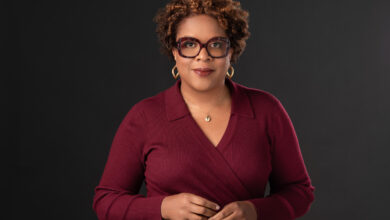
Let me tell people who you are! You are a reporter for the New York Times, you reported for NBC News, and People magazine. Your writing on race and identity has appeared in the New York Times, The New Republic, Oprah Daily, Vice, Teen Vogue, and Bustle. You have covered everything from COVID to now. You’re from Philadelphia, and you now live in Dallas-Fort Worth.
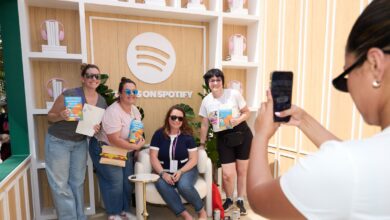
When I met you in Denver at Winter Institute 2025, I cried when I got back to the hotel room because I said, “There is a book that starts from the history of Black-owned bookstores and goes all the way down.” I’m just so happy about that. So, tell me, what inspired you to write it?
Char Adams: First and foremost, I have to say that I’m so happy to be talking to you. I have always been able to feel your passion for this topic. I am so glad that I could feature Turning Page in the book, and I’m so happy I could be talking to you now.
It all started back in 2018 when I read an article in The Atlantic by Joshua Clark Davis. He wrote about Black-owned bookstores that were targeted by the FBI in the 1960s and I was just so intrigued and so fascinated. I found that I wanted to know more about people’s personal stories. I wanted to know what FBI targeting looked and felt like for Black booksellers back then, so I started tracking down those booksellers and collecting their stories. This book grew from that.
VM: Thank you so much. We haven’t had Black-owned bookstores for many years, and we’re beginning to grow and we have grown after COVID.
How have Black bookstores contributed to the African-American community and the Civil Rights Movement? Especially when you talked about Mr. Ruggles — oh, that man was amazing to survive all of that.
CA: Yeah. David Ruggles was the first known Black bookstore owner, and he ran his bookshop in Manhattan starting back in 1834. He was this monumental figure in the anti-slavery movement; he gave speeches and held rallies. He was part of a committee that helped to free some 600 enslaved people, including Frederick Douglass. His bookstore was an extension of his work as an Abolitionist; that laid the perfect foundation and started a tradition of what Black-owned bookstores would be for Black communities in the country.
I think of Black-owned bookstores as these cultural staples, like the Black church has been. Community has always been at the core of what it means to be a Black bookstore. Aside from selling books, Black-owned bookstores have always been in service to their communities in terms of programs and events that they bring their communities. There has always been this holistic approach that Black booksellers have taken to selling books.
VM: Indeed. On the panel in January with other Black-owned bookstores, you talked about the major challenges that Black-owned bookstores are going to continue to face, especially with this new administration, and how they are going to overcome them. You were with Baldwin & Co., Source Booksellers, Solid State Books, and you were talking about what the administration has already started to try to destroy. What more can we do and how can we overcome this?
CA: People ask me, “What is the Black bookstore’s response to these attacks on DEI and diverse books?” The Black-owned bookstore is the response.
Black-owned bookstores aren’t really impacted by book bans because they’ve always sold radical, dissident books, right? So it’s not a question of what should they be doing now in this climate; their very existence pushes back on all of these attacks we’re seeing.
VM: Yes, yes! What particularly moved you or surprised you while putting this book together?
CA: I wouldn’t say that I was surprised by any one thing. I went into this project knowing what the major themes were, but there are moments that I’ve loved. I spoke with two couples in Kansas City, and they all ran a bookstore together back in the late ‘60s, early ‘70s. I sat with them, and we talked about the hardships they faced. One thing that they talked about a lot is that they ran a bookstore with their closest friends, and they called it some of the most fun, joyous, best times of their life. I really, really loved sharing that trip down memory lane and sharing in that joy. They took so much pleasure in running a bookstore with their friends. And I just love that.
VM: My last question is, what do you envision for the future of Black-owned bookstores? I personally think, with what’s going on the administration, we’re going to thrive because we don’t have a choice.
CA: Right.
VM: I got into running a bookstore because my grandmother (as well as Congressman John Lewis) was not allowed in libraries. We had to create our own Black libraries and we’ve lost a lot of those. What do you envision for the future of Black-owned bookstores?
CA: There are so many Black booksellers who are so passionate about not just running a business, they’re passionate about the role of a Black bookstore in the community. So many of them have embraced this idea of the Black bookstore and more, right? So now, tons of Black-owned bookshops open cafes and have event spaces and so many offerings and programs that go beyond selling books. I think we will see more of that innovation. And I think that will keep bookstores afloat and keep them relevant.
VM: Yes, indeed. I was lucky enough and very blessed to meet you in Denver with the other booksellers and to read the book. Then when the book came out, I ordered so many copies, I told my friends, “You have no choice but to buy this.”
CA: Thank you so much!
VM: I tell them, “It will save your life because you’ll know about that Black bookstore.” They’re trying to erase our history; this book is our history. Buy the hardback because we want you to hold on to it. For your kids, your friends, buy them a copy. It’s part of history and we can’t afford to lose it. I mean, I didn’t know about Black-owned bookstores until Karibu in Maryland when I was in college.
I want to thank you so very much. I still talk about your book. I carry it in my car. I’ve got one at work because I like to throw it in people’s faces. They tell people, “Oh, you can’t run a bookstore because of Amazon.” Well, I’m thinking you can run a bookstore in spite of Amazon. Amazon is not the be-all-end-all for bookstores.
I do suggest that in a couple of years, you make a part two, to investigate what kind of effect this administration has had on Black-owned bookstores. And I hope you do, since you’re a great reporter!
CA: Thank you!
VM: It’s history now, it literally is our history. Thank you so much.
CA: Thank you for your questions and for talking with me today.
VM: Thank you for putting me in the book!
CA: Of course!
Black-Owned: The Revolutionary Life of the Black Bookstore by Char Adams (Tiny Reparations Books, 9780593474235, Hardcover, History, $32, On Sale: 11/4/2025)
Source link