
Joe Matera publishes thorough book on ABBA’s 1975 breakthrough album

In 1973, Sweden’s ABBA debuted with the album Ring Ring, receiving little to no attention in the U.S. This changed in 1974, with their second album Waterloo, with the title song, and “Honey, Honey” both making the U.S. Top 40 and the album placing in the U.S. Top 200 albums. With the third album, the self-titled ABBA, momentum picked up in the U.S. with three songs in the Top 40: “SOS,” “I Do, I Do, I Do, I Do, I Do,” and “Mamma Mia.” The Stockholm quartet was truly gaining steam here and around the world with their big breakthrough album, detailed by Australian singer-songwriter, guitarist, and author Joe Matera in The Making of ABBA: The story behind the band’s 1975 breakthrough album from Sonicbond Publishing.
JOE MATERA
The Making of ABBA: The story behind the band’s 1975 breakthrough album
Sonicbond Publishing (paperback and digital formats)
As Joe Matera’s book begins, he introduces the band and the impact of their music on him, “The Swedish foursome, Agnetha Fältskog, Björn Ulvaeus, Benny Andersson, and Anni-Frid Lyngstad, together with their staple of trusted studio musicians, created music that appealed to the young and old, music that bridged the generational gap and etched a musical legacy in stone, one that continues to survive beyond the boundaries of time. I was ten years old when I bought ABBA on vinyl upon its release in 1975. I remember playing it on my parents’ radiogram, a leftover piece of furniture from the 1960s that incorporated a turntable. I would play that album daily. The music became such a part of my daily existence that it became pivotal in solidifying my deep love for the glorious songs of pop music. The ABBA album introduced me to a whole new world of pop music, one that was unique and remarkably different to the current flavor of the day. With the album’s variety of styles, it opened my mind and ears as I delved into musical tastes that I may not have discovered if it were not for ABBA. Later, as I ventured through different stages of my life and my musical leanings changed and evolved, the music of ABBA and specifically this album, has remained a constant and a lifetime favorite.”
The ABBA album introduced me to a whole new world of pop music. As I ventured through different stages of my life and my musical leanings changed and evolved, the music of ABBA and specifically this album, has remained a constant and a lifetime favorite. – Joe Matera
The first U.S. single from the album was “SOS.” Matera shared, “The Who’s guitarist Pete Townshend once stated that it was the best pop song ever written and I agree. In my opinion, it is the textbook on how to write the perfect pop song.” He points out, “The song ‘SOS’ has the honor of being the only song to chart on the U.S., Australian, and U.K. charts where both the song’s title and group name are palindromes; they spell the same thing forwards and backwards.” Additionally, SOS is commonly considered as initialism for Save Our Ship and ABBA is an acronym for Agnetha Björn Benny Anni-Frid.
The second U.S. single’s chart debut was Valentine’s Day 1976, “I Do, I Do, I Do, I Do, I Do.” Matera’s describes it as, “Upon a blast of velvety saxophone playing an ascending phrase of triplets, a spirit of nostalgia pervades throughout and sets the mood and theme for this cabaret-style outing. The sounds of ‘I Do, I Do, I Do, I Do, I Do’ connected with the older listening audience due to its having a more traditional and nostalgic tone.”
The U.S. flip side of “I Do, I Do, I Do, I Do, I Do” was “Bang-A-Boomerang” which Matera calls “instantly infectious with its catchy yet sing-along lines.” He points out that all ten songs from the albums were flip sides of singles from this album or the subsequent Arrival album somewhere in the world, and that globally there were seven A sides extracted from ABBA, putting it on a similar level of what would come in the following decade with Michael Jackson’s Thriller.
The third U.S. single has become the title song of the successful musical, film, and sequel, “Mamma Mia.” Matera reveals, “This hook-driven pop anthem with a bright and uplifting spirit was the last song recorded for ABBA. Ulvaeus stated that the verse and chorus were written at different times and were later woven together into one composition.”
“Hey, Hey Helen” is an example of the variety found in the album. Matera states, “The stomping drum beat, tinged with a touch of reverb, and anthemic chorus are very music reminiscent of the sound of 1970s glam rock.” This ABBA song sounds like what Suzi Quatro was delivering at the time and what Joan Jett and the Blackhearts would do in the following decade.
More in line with what we would hear from ABBA in the years that followed is “I’ve Been Waiting for you.” Matera calls it, “An angelic ballad, with poignant lyrics that are given full expression with the supporting chordal harmony. Fältskog’s vocals contain an enormous emotional depth and heart. When the chorus enters, it’s a heavenly choir.”
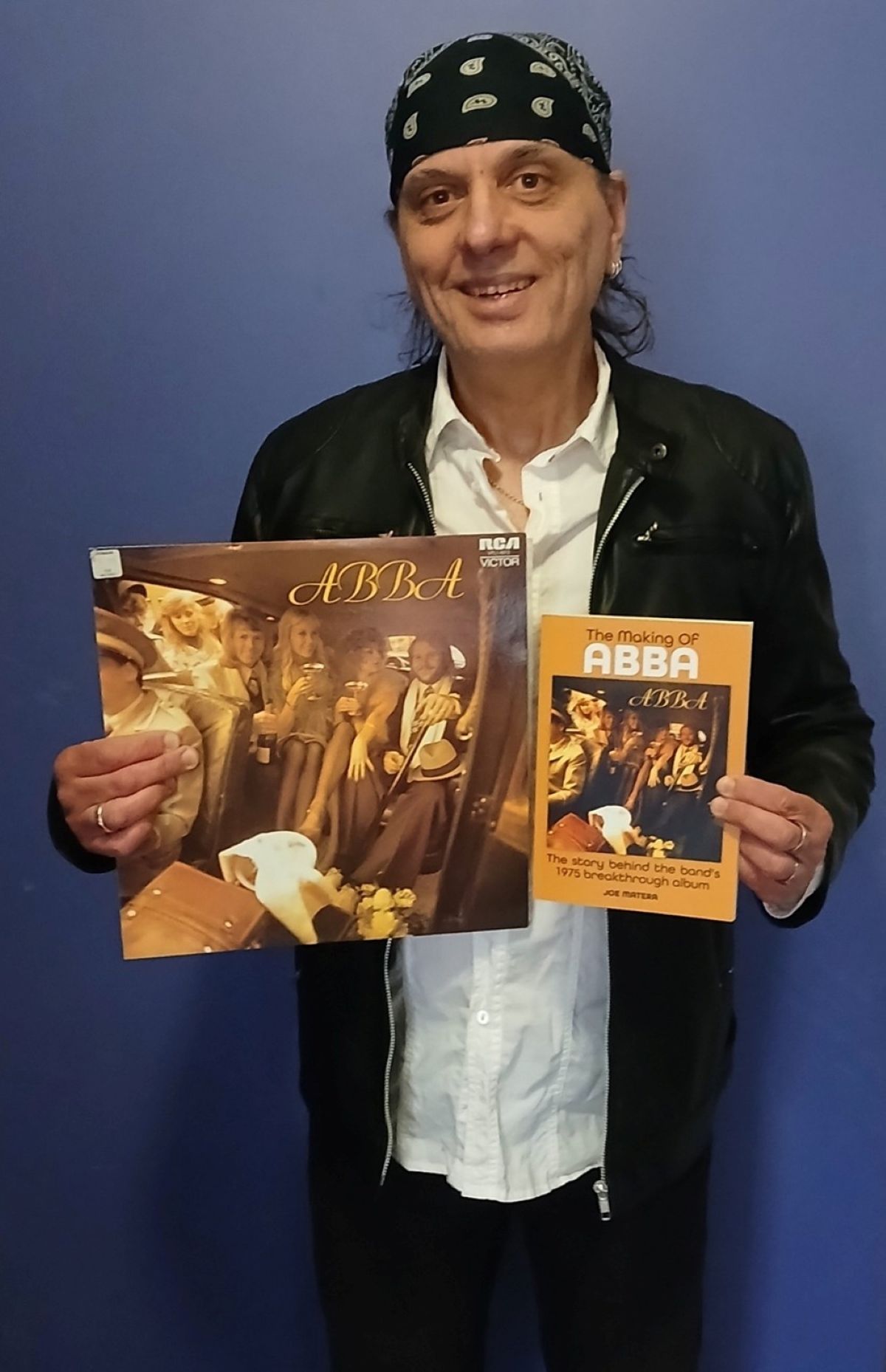
Joe Matera, photo by Liz Matera
Related Links:
Get music books and more in our Goldmine store (see below):

Click here to get the above items (and more!) in the Goldmine store
Warren Kurtz is a long-time music journalist, author and Contributing Editor at Goldmine, writing over 700 articles including the weekly Fabulous Flip Sides and monthly In Memoriam series (both exclusively online at goldminemag.com) covering rock, pop, Americana, R&B and more. goldminemag.com/author/warren-kurtz/
Warren’s Fabulous Flip Sides radio segment can be heard most Saturdays, around 9 a.m. Eastern Time as part of DJ Brian Donovan’s Moments to Remember show, on WVCR 88.3 “The Saint” at wvcr.com or iHeart.com (search WVCR). Contact email: [email protected]
Source link